
 Facebook
 Instagram
 X (Twitter)
 TikTok
 Pinterest
 YouTube
 LinkedIn
 Threads
 Google Business Profile
 Telegram
 Discord
Skincare UGC Without Influencers or a Big Budget


The single biggest gap between a small skincare brand's feed and a large one's is rarely the product. It is volume of the product being visibly used: in a hand, on a face, at a counter, in a routine. A large brand solves this with a roster of paid creators; a small one usually cannot, at least not at the pace a weekly posting schedule demands. This guide is about the gap in between: what genuine user-generated content actually requires, and what AI can and cannot substitute for it. It follows on from our guide to marketing a skincare brand.
Why in-use content outsells the bottle alone
A skincare product photographed on its own answers "what is this," not "does this work on someone like me" or "what does it actually look like being used." UGC, in its original and truest sense, a close friend's honest video, a stranger's swatch, a customer's own bathroom mirror selfie, answers all three at once, which is why it consistently outperforms a brand's own polished product photography in this category specifically.
The trouble is supply. Real UGC depends on customers who are willing to film themselves, which is a small and unpredictable fraction of any customer base, and paid creators cost real money per post, which is hard to sustain at the volume a consistent weekly schedule needs. Most small skincare brands end up with either a handful of great UGC clips reused until they feel stale, or a return to flat product photography out of necessity, neither of which is where they want to be.
The math is worth stating plainly. A weekly posting schedule across two or three channels wants somewhere from four to eight pieces of visual content a week. Even a generous flow of organic UGC rarely produces that volume on its own, and a paid creator roster large enough to fill the gap costs more than most small skincare brands can justify before they have the revenue that volume of content is supposed to help produce. Something has to fill the middle, and until recently, the only option was simply posting less often, or posting the same product on a shelf again.
The three routes to in-use content
1. Real customer UGC, actively requested. The gold standard, and worth actively pursuing: ask happy customers directly, offer a discount or a feature in exchange, and make it easy by telling them exactly what would help (a swatch, a quick routine clip, a plain "does this work" testimonial). This never scales to cover every product every week, but it should be the first thing you try for your best sellers.
2. A paid creator or micro-influencer. Faster and more controllable than waiting for organic UGC, and worth the cost for a launch or a hero product, but it is a per-post expense that most small brands cannot run every week across a full catalog.
3. An AI-generated composite. Upload the flat product photo, pick a hold-mode scene (a counter routine, a hand swatch, a close-up beside the face), and get back an image of your exact product in that moment in minutes. It is the only one of the three that scales to cover a full catalog on a weekly schedule without either a customer's goodwill or a creator's invoice.
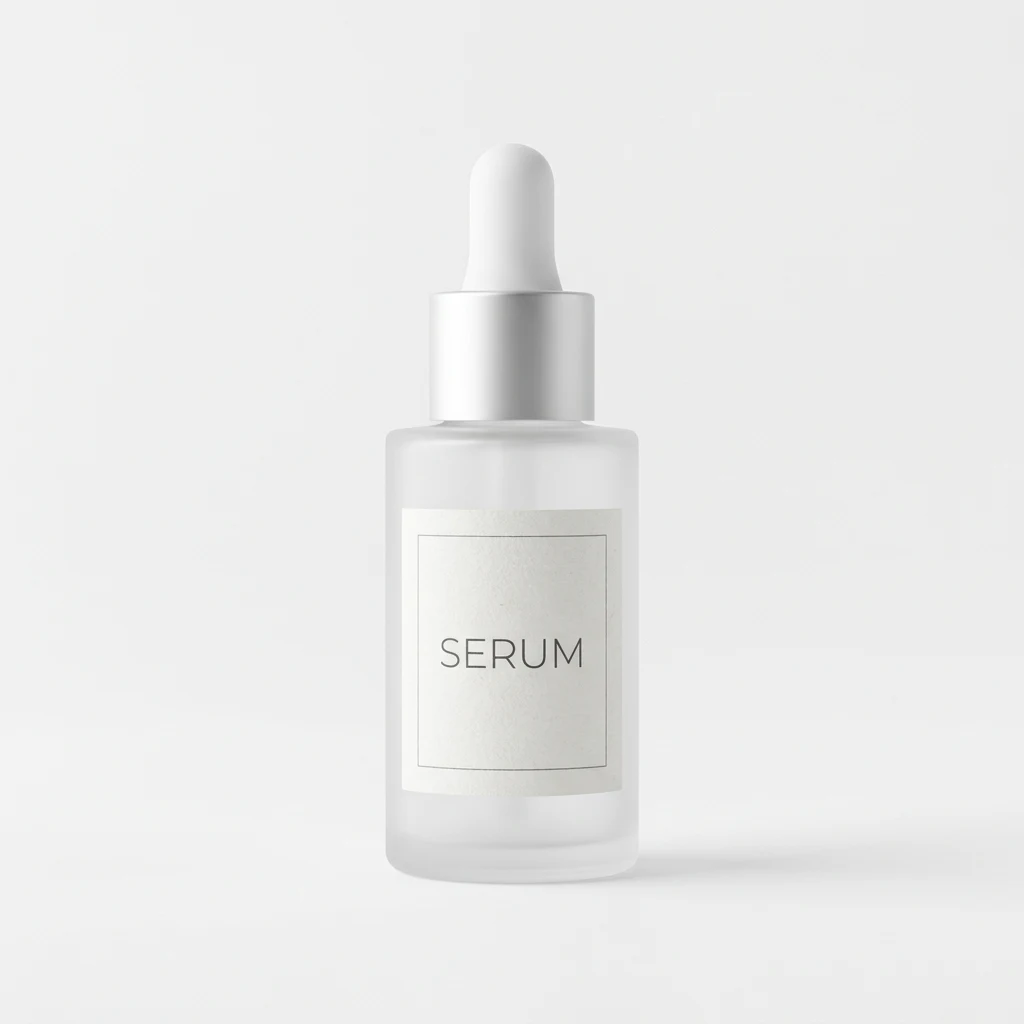
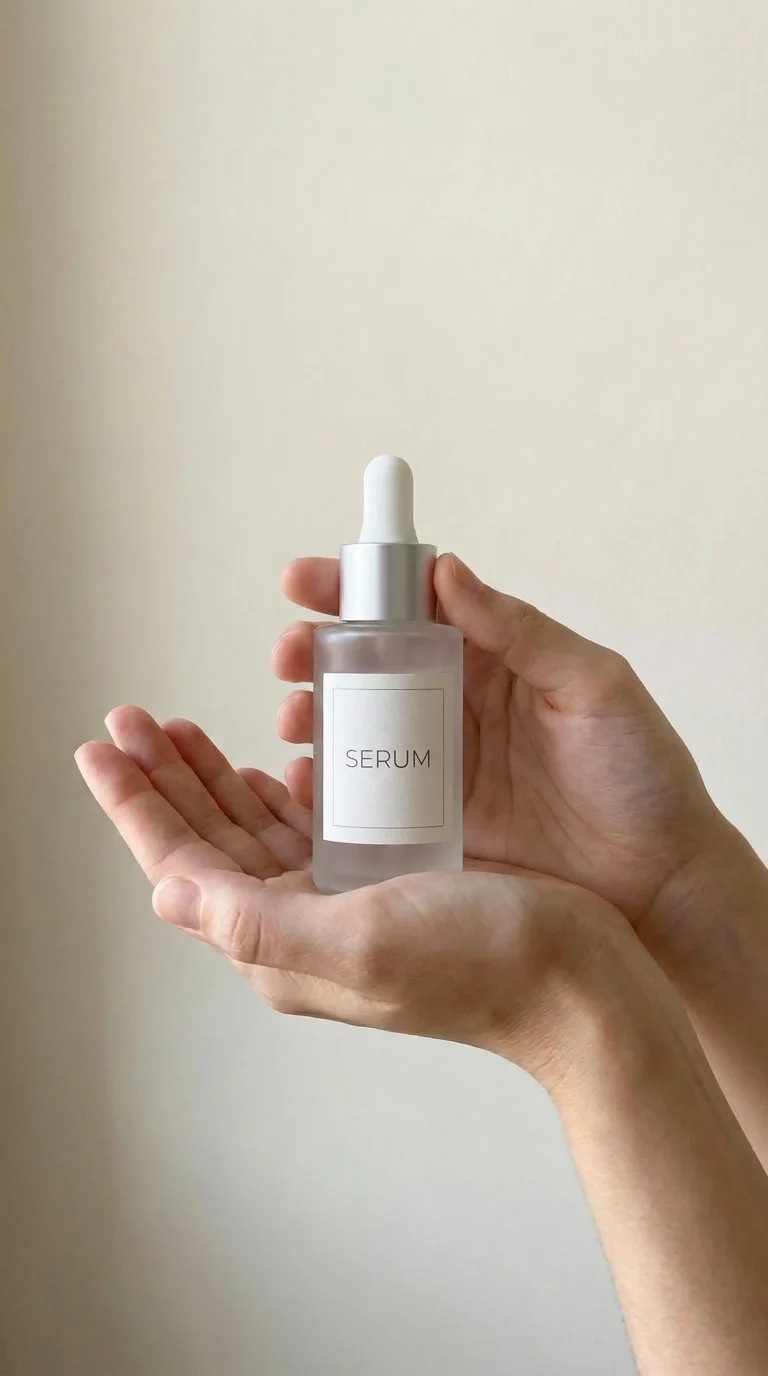
None of the three routes replaces the other two. A realistic mix leans on real UGC and a creator for hero launches, and AI composites for the steady weekly volume across everything else in the catalog that would otherwise sit as a flat bottle photo indefinitely.
Think of it as a funnel rather than a menu to choose once from. A new product might start with an AI composite in its first week simply because nothing else exists yet, pick up a genuine customer photo within the first month once it starts shipping, and eventually earn a paid creator's attention once it proves itself a bestseller. The three routes are stages a product can move through, not a single decision made once and left alone.
What to check on every generated shot
- Does the label read correctly, with no invented or distorted text?
- Does the bottle or tube's actual shape and color match the real product exactly?
- Does the hand or face interacting with it look like a natural, unposed moment rather than an obviously synthetic gesture?
- Is the lighting and setting consistent enough with your other content to read as the same brand?
A generated image that fails any of these is worth regenerating or discarding rather than posting; the whole value of this approach depends on the composite being convincing, and one obviously wrong label undermines trust in every other image you post afterward.
Can I use AI for a category built on trust?
This is the fair question skincare specifically raises, more than most categories. The honest answer is that AI-generated in-use imagery is a legitimate visualization tool, similar in spirit to a rendered product mockup, and not a substitute for a genuine result or a real customer's testimony. It shows a real, unaltered product being held or used; it does not, and should not be made to, claim a skin result that never happened.
Disclosure matters here more than in most other categories on Shopify. Yoomru labels AI-generated posts with a visible disclosure by default, and that default is worth keeping specifically for skincare: a buyer who later realizes an "in use" photo was generated, undisclosed, loses trust in every other claim the brand has made, which is a far more expensive outcome than simply being upfront about the image's origin from the start.
There is a useful line to hold onto here: AI in-use imagery is being honest about a real, unaltered product in a plausible moment, the same honesty a well-made packaging render or a 3D product mockup already claims. It becomes dishonest the moment it starts implying something that did not happen, a specific result, a specific transformation, a specific person's experience. Keep composites in the first category and the tool stays a legitimate part of the toolkit; let it drift into the second and it becomes exactly the kind of overclaiming this category has spent years trying to earn its way out of.
Building a small reusable persona set
Reuse the same one or two personas and scenes across a family of products rather than treating every post as a one-off creative decision. A consistent hand, a consistent counter, a consistent lighting style across your generated content reads as a deliberate visual identity rather than a scattered collection of AI experiments, in exactly the same way a consistent real photographer's style would.
Match the scene to what the product is actually for, not just to whichever looks nicest. A counter routine scene suits a product used as part of a morning or evening sequence; a close hand swatch suits anything where texture is the selling point; a face-adjacent close-up suits a product applied directly and visibly. Picking the scene that matches the product's real use is a small choice that makes the whole set feel considered rather than arbitrary.
Where Yoomru fits
Yoomru's AI UGC scenes cover the third route above directly, built specifically for beauty and skincare among other categories: pick a product, pick a hold-mode scene, and get your exact product composited into that moment in minutes, ready to post or add to the calendar. Pair it with turning reviews into social proof for the trust-building half of the equation; the two together cover both what a product looks like in use and proof that it actually works.
Before you publish a generated shot
- Is the AI disclosure visible, not hidden or removed?
- Does the product itself look exactly like what a customer will receive?
- Is this reserved for showing the product in use, not for implying a specific skin result?
- Does it match the visual style of your real photography closely enough to sit in the same feed?
FAQ
Will viewers be able to tell a composite is AI-generated? Sometimes, and that is fine as long as it is disclosed; the goal is a believable in-use moment for a product buyers already trust from other content, not a claim that fools anyone.
Should I stop asking customers for real UGC once AI composites are available? No. Real UGC remains the strongest single asset in this category; AI composites exist to cover the volume real UGC cannot, not to replace pursuing it.
Can AI composites show a specific skin concern, like acne or redness? This is where the line should be drawn firmly: use AI for showing the product being held or applied, and rely on genuine customer photos and reviews for anything claiming a specific skin condition or result, since a generated "before" skin condition is not something that ever happened to a real person.
How many generated images does a small catalog actually need? Two or three scenes per hero product is usually enough to carry a few weeks of posting before it starts to feel repetitive, at which point a different scene or a fresh real photo keeps the feed feeling current.
Does this replace hiring a photographer entirely? Not for your hero products or your core brand photography, which still benefit from a real shoot's control over lighting, styling and mood. It replaces the flat bottle photo that would otherwise be the only visual for most of a catalog, which is a different and much lower bar.
What if a generated image looks slightly uncanny? Regenerate it with a different scene rather than posting a shot that does not quite look right; a slightly off composite undermines the same trust real UGC is meant to build, and it costs nothing but a few minutes to try again.